

In the twilight between what is real and what is fabricated, there exists a peculiar phenomenon known as “the liar’s dividend”—perhaps the most paradoxical gift of our technological age. As artificial intelligence grows more sophisticated in its ability to generate convincing falsehoods, those who trade in deliberate deception have discovered an unexpected windfall: when nothing can be trusted, everything becomes equally plausible.
Truth or Dare?
Consider a world where every image might be generated, every video potentially manipulated and every voice possibly synthesised. In this landscape of uncertainty, the ancient question “What is truth?” takes on new dimensions. The liar’s dividend manifests when bad actors exploit this uncertainty, claiming that genuine evidence of their misdeeds is artificial—mere fabrications conjured by machines. When everything can be fake, nothing needs to be true.
This dynamic creates a perverse incentive structure. The more sophisticated our AI systems become at generating convincing falsehoods, the more powerful the liar’s dividend grows. It’s as if we’ve created a philosophical perpetual motion machine, where advances in artificial intelligence simultaneously strengthen both the ability to create deception and the ability to deny truth. The very tools we develop to detect artificial content become weapons in the hands of those who would discredit authentic evidence.

Would I Lie to You?
What makes this phenomenon particularly insidious is its democratic nature. Unlike sophisticated AI tools, which require expertise and resources to deploy, the liar’s dividend is available to anyone willing to invoke it. A corrupt politician caught on camera can simply claim the footage is deep-faked. A corporation faced with damning evidence can dismiss it as artificially generated. The mere existence of the technology becomes a shield against accountability.

A Frame of Reference
Yet within this crisis of truth lies a seed of opportunity. Perhaps the liar’s dividend will force us to evolve beyond our reliance on single pieces of evidence, pushing us toward more holistic systems of verification. In a world where any individual piece of evidence can be questioned, the truth may emerge not from singular proofs but from webs of interconnected verification, from the patterns that emerge when we step back to view the larger picture.
The rise of artificial intelligence has often been framed as a story about machines becoming more like humans. But the liar’s dividend reveals a different narrative—one about how AI is forcing us to confront our own relationship with truth. In an age where machines can lie convincingly, perhaps we will finally have to grapple with the full complexity of human truth-telling and truth-seeking.

The Evidence Shows…
Moving forward, our challenge is not merely technological but deeply philosophical. We must learn to navigate a world where the very concept of evidence has been transformed. The solution may lie not in better technology alone, but in better systems of trust, more robust networks of verification, and a renewed commitment to the patient work of truth-seeking.
The Tapestry of Truth
For in the end, the liar’s dividend reveals something profound about the nature of truth itself: it has never been simply about individual pieces of evidence, but about the broader tapestry of reality we weave together. As AI continues to evolve, so too must our understanding of what it means to know something is true. The greatest irony of the liar’s dividend may be that in making everything potentially false, it pushes us toward a deeper and more nuanced understanding of truth.

The Juxtaposition
Here’s the rub: The content in the above essay (bar the headings, some images and the words in this section) was generated by AI.
Did the article make you think? … And what do you think now?
I wanted to explore this topic philosophically. So, I prompted AI to help me consider the “liar’s dividend” concept in a way that would make sense to me—mentally and emotionally—and align with my values. What is true anymore? What can I trust; who can I rely on? My research on AI’s limitations, ethical practices and misuse of AI highlighted this quandary.
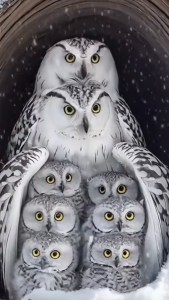
We scroll to find an amazing video, photo or “fact”… like the beautiful video of owls protecting their young I just saw on social media. Seems it’s not real.
Interesting times.
More information on AI:

 Ascension Editing
Thank you, Annie, very insightful ❤